

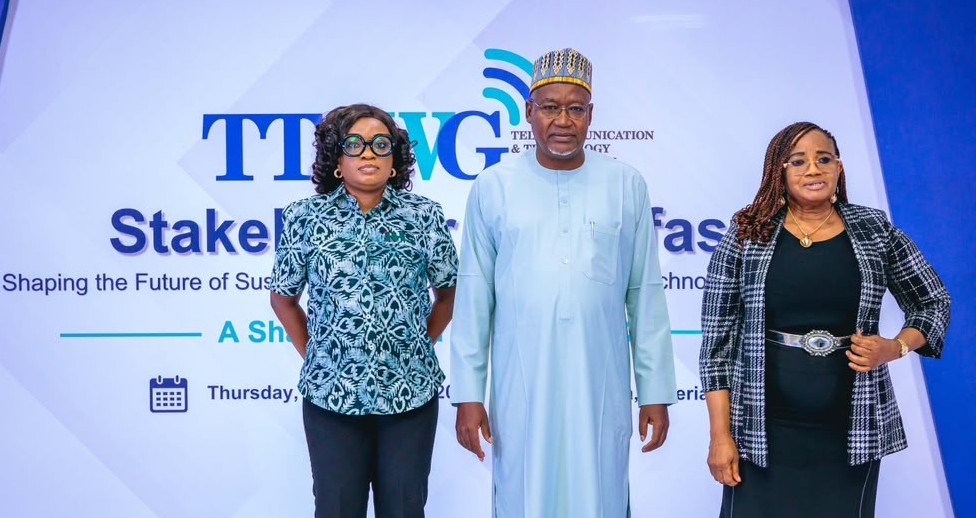
IHS Nigeria, TTSWG Push for Stronger Sustainability Framework in Nigeria’s Tech Sector
Abuja, September 17, 2026 — IHS Nigeria has reaffirmed its commitment to promoting a more sustainable, resilient and inclusive telecommunications and technology sector in Nigeria.

The company made this known at a stakeholder breakfast session organized by the Telecommunications and Technology Sustainability Working Group (TTSWG) on Thursday, September 17, at the Abuja Continental Hotel.
The engagement brought together representatives of regulatory agencies, telecommunications and technology companies, academia, development organisations, startups and other stakeholders to deliberate on key sustainability priorities within the sector.
A major focus of the meeting was the TTSWG’s draft 2025–2030 Strategy and its proposed sustainability metrics framework for Nigeria’s telecommunications industry, both of which were presented for stakeholder input and further review.
Speaking on behalf of IHS Nigeria, the company’s Director of Sustainability, Titilope Oguntuga, described the engagement as an important platform for strengthening collaboration and advancing practical sustainability solutions across the industry.
Oguntuga said the dialogue provided an opportunity for stakeholders to assess progress made so far while identifying areas requiring greater attention, particularly around environmental, social and governance priorities.
She noted that technology and innovation remain important tools for addressing challenges confronting the telecommunications and technology ecosystem, adding that collaboration among industry players, regulators and other stakeholders would be critical to building resilient digital infrastructure.
According to her, TTSWG provides a platform for policy dialogue, research, capacity building and partnerships around shared sustainability priorities in the sector.
In his opening remarks, Chairman of the TTSWG Board, Engr. Abdu-Waya Mohammed, said the draft strategy was designed to provide a framework for deepening collaboration on sustainability across Nigeria’s telecommunications and technology ecosystem.
He identified renewable energy adoption, digital inclusion, stronger governance frameworks, collaborative innovation and sustainable development as some of the key areas covered by the strategy.
Mohammed, however, emphasised that the strategy remains a draft developed through stakeholder engagement and is open to further contributions from industry participants and other stakeholders.
Also speaking at the event, Chief Executive Officer of the Nigeria Climate Innovation Center (NCIC), Bankole Oloruntoba, described TTSWG as a multi-stakeholder platform established to advance sustainability across the telecommunications and technology ecosystem.
He said the Working Group’s areas of focus include sustainable energy adoption, digital inclusion, electronic waste management, gender and capacity development, youth participation, innovation, community development and policy advocacy.
Oloruntoba also highlighted some of the group’s ongoing initiatives, including the Innovation Makers Challenge (IMC), research and knowledge-sharing activities, webinars and programmes aimed at recognising and supporting innovation within the telecommunications and technology ecosystem.
Another major feature of the engagement was the presentation of a proposed sustainability metrics framework for the Nigerian telecommunications industry by Dr. Chris Uwaje, a Board Member of TTSWG.
The framework proposes measurable indicators for assessing sustainability performance in areas such as energy and decarbonisation, digital inclusion and affordability, digital integrity and consumer trust, infrastructure resilience, governance and waste reduction.
Uwaje stressed that the metrics are still being developed and are being subjected to stakeholder review and feedback before consideration by relevant regulatory authorities.
Representing the Executive Vice Chairman of the Nigerian Communications Commission (NCC), Helen Obi, Director of the Commission’s Digital Economy Department, acknowledged areas of alignment between the NCC’s priorities and the issues being promoted by TTSWG.
These areas include broadband expansion, resilient connectivity, digital skills development, local device manufacturing and assistive technologies for people living with disabilities.
The NCC encouraged TTSWG to formally submit its proposed sustainability metrics framework and other relevant documents to the Commission for detailed review and feedback.
During the interactive session, participants raised recommendations on issues including access to financing for technology and telecommunications innovation, alignment with international sustainability standards, accessibility for people with disabilities and the need for clearer mechanisms for translating research findings into measurable policy and industry outcomes.
TTSWG also encouraged stakeholders to continue submitting feedback through its engagement channels and called for broader participation in the Working Group, particularly from organisations and professionals in Abuja and Northern Nigeria.
In her closing remarks, Vice Chairperson of the TTSWG Board, Dr. Wunmi Hassan, urged stakeholders to remain actively engaged with the Working Group and contribute to efforts aimed at building a stronger sustainability ecosystem for Nigeria’s telecommunications and technology sectors.
She appreciated IHS Nigeria and NCIC for their support towards advancing the TTSWG agenda and encouraged organisations across the ecosystem to participate in its programmes and initiatives.
The Abuja stakeholder engagement is part of TTSWG’s broader efforts to deepen stakeholder participation and promote a coordinated approach to sustainability across Nigeria’s telecommunications and technology sectors.
Leave feedback about this