

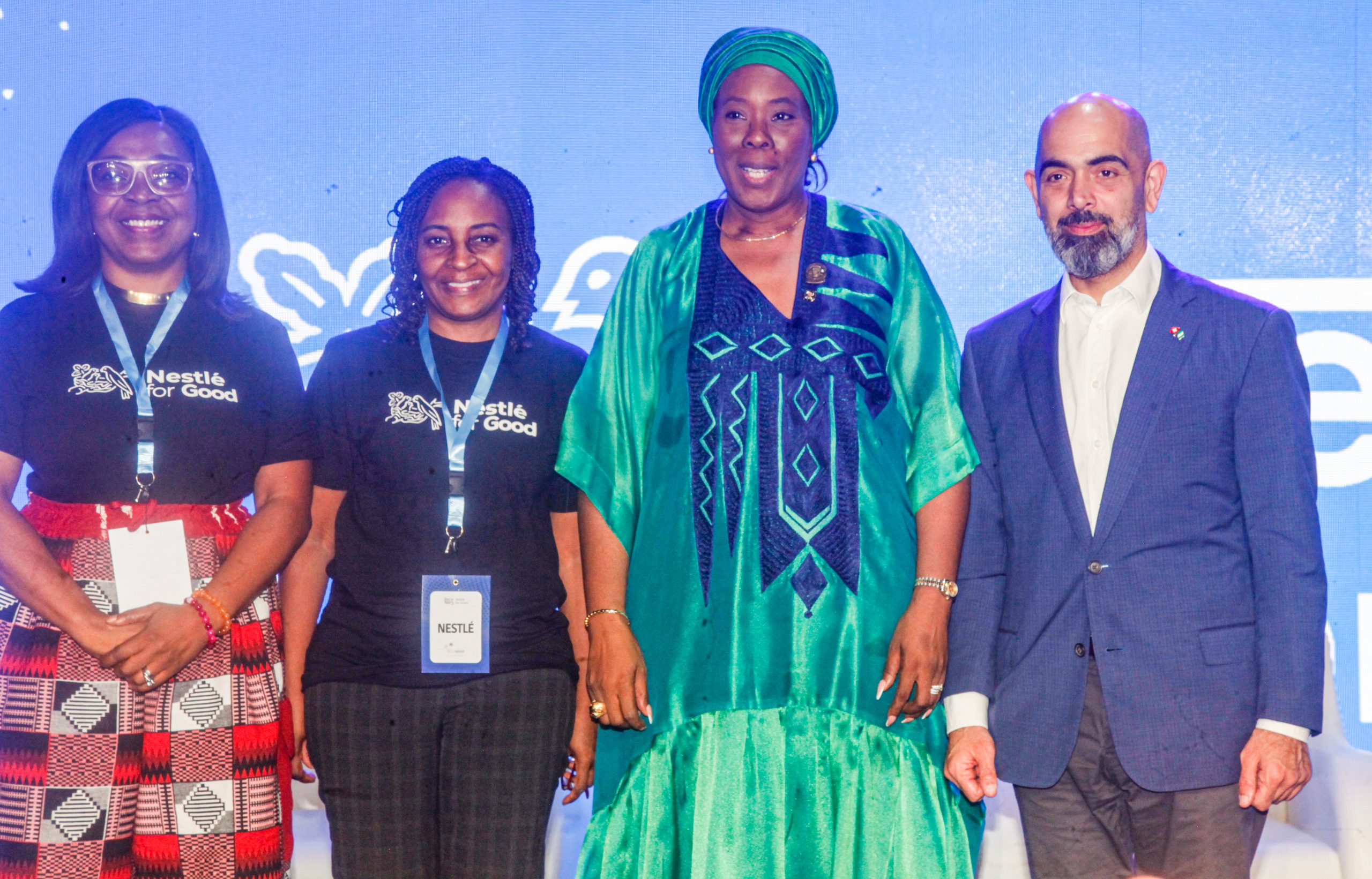
Food Systems Reform Takes Centre Stage at 2026 Nestlé For Good Summit in Lagos
Stakeholders advocate stronger partnerships to tackle nutrition and healthcare challenges
Nigeria’s growing nutrition and healthcare concerns came under sharp focus in Lagos on Thursday as policymakers, healthcare experts, development agencies, academics, civil society groups, and private sector leaders gathered at the 2026 Nestlé For Good Summit to push for urgent reforms across the country’s food systems.
The summit moved beyond conventional discussions on nutrition, evolving into a strategic platform for conversations around policy reforms, sustainable agriculture, healthcare integration, environmental protection, and economic resilience.
Participants agreed that Nigeria’s food and nutrition challenges can no longer be addressed through isolated interventions, stressing the need for coordinated action capable of improving agricultural productivity, strengthening supply chains, supporting livelihoods, and ensuring healthier populations.
Speaking at the opening session, Head of Corporate Communications, Public Affairs and Sustainability for Central and West Africa at Nestlé, Patricia Ekaba, described the “Nestlé For Good” initiative as a deliberate effort aimed at promoting accountability, transparency, and measurable social impact.
According to her, the campaign highlights the company’s broader responsibilities beyond food production.
“Nestlé For Good is about our commitment beyond products. It is about exploring the invisible side of our business — our commitments to communities, the planet, and nutrition,” she said.
Ekaba explained that the initiative aligns with the company’s Creating Shared Value model, which connects business growth with social and environmental progress.
She added that the campaign was also designed to showcase real-life stories of beneficiaries across the region, including communities in Côte d’Ivoire and Ghana whose livelihoods improved through Nestlé-supported programmes.
“These stories remind us that supporting people also helps restore confidence, dignity, and a sense of purpose,” she stated.
She further stressed that the company’s sustainability programmes are built for long-term impact rather than short-term charity.
“This is not philanthropy. If it were, these programmes would not have lasted for decades,” Ekaba added.
Managing Director and Chief Executive Officer of Nestlé Nigeria Plc, Wassim Elhusseini, said nutrition outcomes are closely linked to the efficiency of wider food ecosystems.
“Nutrition does not start at the factory and does not end with a product on the shelf,” he said.
Elhusseini noted that the company’s investments in regenerative agriculture, youth development, water efficiency, and circular economy initiatives are designed to build resilient communities and sustainable food systems.
Delivering the keynote address, Folashade Ambrose-Medebem emphasised the importance of ensuring nutritious food remains available, affordable, and accessible to Nigerians.
“Nutritious food must not only be available, it must also be affordable and consistently accessible to all households,” she said.
She called for stronger collaboration between government institutions and the private sector, stressing that food security can only be achieved through coordinated investments and effective policy implementation.
On agriculture and food security, Agric Services Manager at Nestlé Nigeria, Edwin Aguda, disclosed that the company’s grains programme in Northern Nigeria currently supports over 18,000 smallholder farmers, with plans to expand participation to 25,000 farmers by 2027.
He described the initiative as critical to strengthening rural economies and integrating local farmers into formal supply chains.
Speaking during the environmental sustainability session, Sustainability Manager at Nestlé Nigeria, Chinwe Obi, said sustainability has become a core part of business operations.
According to her, the company has introduced 50 per cent recycled plastics into its water bottles and helped expand the Food and Beverage Recycling Alliance from four organisations to about 43.
She revealed that more than 400,000 tonnes of plastic waste have been recovered through the alliance since 2019, alongside additional recoveries through direct partnerships.
The summit’s technical panel session, themed “Nutrition Across the Life Stages: Closing Nutrition Gaps Through Coordinated Approach,” examined the broader health implications of Nigeria’s food challenges.
Programme Team Lead at the Nutrition Society of Nigeria, Amaka Nwaora, raised concerns over worsening nutrition indicators, including rising cases of anaemia among women, child stunting, obesity, diabetes, and hypertension.
Experts warned that Nigeria is increasingly facing a dual burden of undernutrition and non-communicable diseases, largely driven by poor diets and weak food systems.
Panelists also identified structural problems such as fragmented policy implementation, weak collaboration among government agencies, and inadequate funding for nutrition programmes.
Beyond policy discussions, the summit also highlighted human capital development and empowerment initiatives.
Beneficiaries shared personal experiences of transformation through financial literacy training, dairy support programmes, and technical capacity development initiatives.
A graduate of the Nestlé Technical Training Centre recounted how the 18-month programme improved technical expertise and leadership skills, including exposure to sustainability and emissions reduction training in Switzerland.
“At Nestlé, we are one family,” the trainee said.
The summit concluded with stakeholders calling for stronger partnerships, sustainable financing, climate-smart agriculture, improved maternal and child nutrition programmes, youth empowerment initiatives, and better execution of nutrition-related policies.
Participants maintained that solving Nigeria’s food and nutrition crisis will require an integrated approach that connects agriculture, healthcare, education, environmental sustainability, and economic planning.
Leave feedback about this