
BAKARE-OKI AND THE NEW LASTMA: REBUILDING TRAFFIC MANAGEMENT ON PROFESSIONALISM, TECHNOLOGY AND TRUST
By Adebayo Taofiq
From enforcement to intelligent mobility, accountability and public service, the LASTMA under Olalekan Bakare-Oki is undergoing a significant institutional transformation.
 In a city as vast, dynamic and densely populated as Lagos, traffic management goes far beyond the routine control of vehicles and enforcement of road regulations. It is a critical public-service function that directly affects economic productivity, public safety, emergency response and the daily lives of millions of residents.
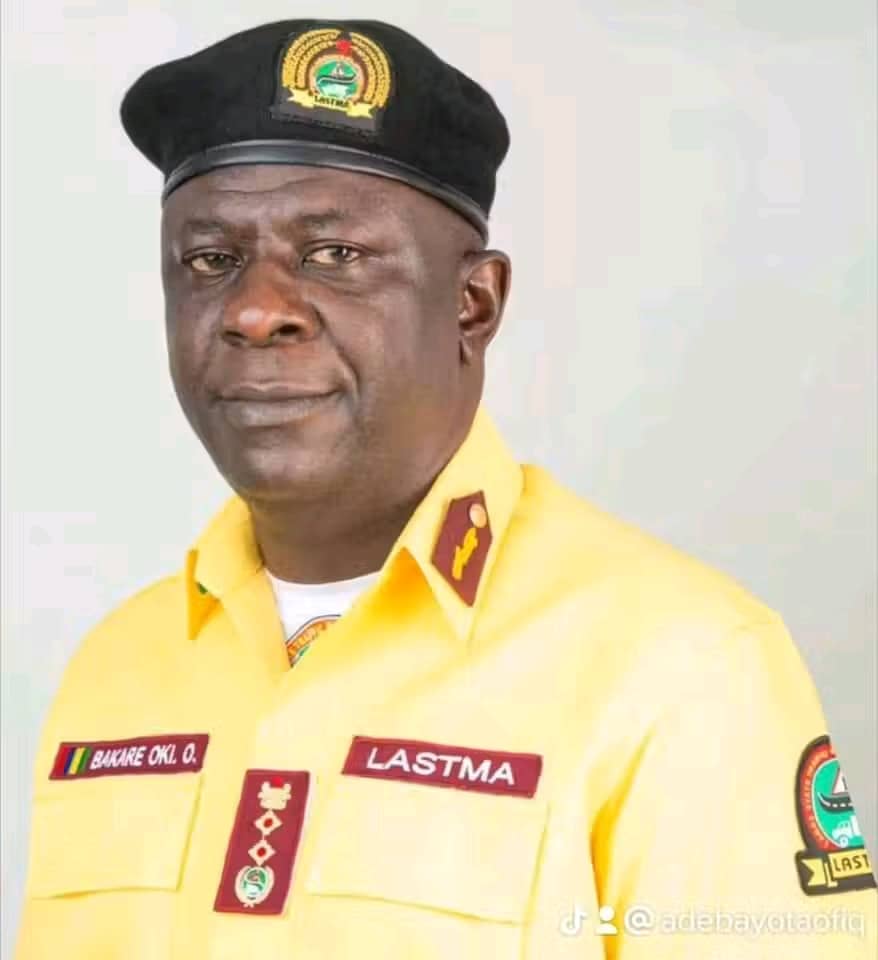
It is against this backdrop that the leadership of Mr. Olalekan Bakare-Oki, General Manager of the Lagos State Traffic Management Authority (LASTMA), has attracted attention for its emphasis on institutional renewal, professionalism, technology, accountability and improved engagement with the public.
Rather than viewing traffic management solely through the prism of enforcement, the emerging approach places greater emphasis on building an agency capable of anticipating traffic challenges, responding swiftly to emergencies and maintaining a professional relationship with road users.
REDEFINING THE LASTMA OFFICER
At the centre of any institutional reform is the quality of its personnel.
Under Bakare-Oki, greater attention has been placed on training, retraining and professional development, reflecting the understanding that effective traffic management requires more than the ability to direct vehicles or apprehend traffic offenders.
Today’s traffic officer operates in an increasingly complex environment. Officers routinely encounter road crashes, vehicle breakdowns, traffic congestion, distressed motorists and other emergencies that require sound judgement and effective communication.
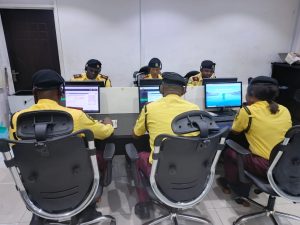
Consequently, qualities such as emotional intelligence, crisis management, communication skills, ethical conduct, discipline and respect for human dignity have become increasingly important to the evolving LASTMA operational philosophy.
The traffic officer is therefore being repositioned not simply as an enforcement official, but as an ambassador of government, a custodian of public safety and, in many circumstances, a first responder.
Every interaction between an officer and a member of the public presents an opportunity to build confidence in government and public institutions.
TECHNOLOGY AND THE FUTURE OF MOBILITY
One of the defining features of contemporary traffic management is the increasing use of technology.
LASTMA’s operational deployment of surveillance systems, drones, Traffic Management Solution (TMS) devices, patrol vehicles, body-worn cameras, communication systems and command-and-control mechanisms reflects the growing need for data-driven and intelligence-led traffic management in a megacity such as Lagos.
The newly introduced LASTMA toll-free short code, 3367, has also provided another important channel for public engagement. The platform enables members of the public to submit complaints, provide feedback and commend outstanding officers, thereby creating a more direct line of communication between the Agency and the people it serves.
Beyond receiving public feedback, such mechanisms can strengthen accountability and encourage officers to maintain professionalism in their daily interactions with motorists and other road users.
The broader objective is a gradual shift from reactive enforcement to proactive traffic management.
In a city where an accident, broken-down vehicle or road obstruction can trigger significant congestion within minutes, the ability to detect incidents quickly, mobilise personnel and coordinate responses can make a substantial difference.
Technology, therefore, is not merely about modern equipment. Properly deployed, it becomes an important instrument for improving response time, managing traffic more efficiently and protecting lives.
THE HUMAN FACE OF TRAFFIC MANAGEMENT
Ultimately, the success of any traffic-management system should be measured not only by statistics but also by its impact on human lives.
Behind every road crash attended to by LASTMA is a motorist, passenger, pedestrian or family whose circumstances may depend on how quickly emergency assistance arrives.
Behind every obstruction removed is a road corridor returned to productive use. Behind every stranded motorist assisted is a potential traffic disruption that may have been prevented from escalating.
LASTMA’s reported 2024 interventions provide an indication of the scale of the responsibility. The Agency reported rescuing 1,075 lives, attending to 2,051 crashes involving 3,754 vehicles and responding to more than 5,100 cases of vehicular breakdown.
Beyond the figures are countless individual stories that statistics cannot fully capture.
Every life saved represents a family spared grief. Every timely intervention can prevent a minor incident from becoming a major disaster.
This humanitarian responsibility remains one of the most important dimensions of traffic management.
ACCOUNTABILITY AS A CORNERSTONE
An enforcement institution exercises considerable authority, and such authority must always be accompanied by accountability.
For LASTMA, the conduct of individual officers can significantly influence public perception of the entire Agency. This makes discipline, integrity and effective supervision essential components of institutional credibility.
The Bakare-Oki administration has continued to emphasise professionalism and zero tolerance for corruption and misconduct, while strengthening mechanisms for supervision and discipline.
The principle is clear: public trust cannot be built on declarations alone. It must be demonstrated through consistent conduct, transparent processes and accountability.
BUILDING PARTNERSHIPS FOR BETTER TRAFFIC MANAGEMENT
Traffic management is also an area that requires collaboration.
LASTMA’s responsibilities intersect with the work of the police, emergency-response agencies, transport stakeholders, infrastructure authorities, local communities, road users and the media.
No traffic-management institution can effectively address the mobility challenges of a megacity through enforcement alone.
Stakeholder engagement and public enlightenment are therefore crucial.
The LASTMA Media Mayors initiative is one example of the Agency’s efforts to deepen its relationship with the media and improve public understanding of traffic management.
By equipping journalists with a better understanding of traffic regulations, road safety and the Agency’s operational responsibilities, the initiative can help promote more informed public discourse and strengthen the connection between LASTMA and the communities it serves.
WHAT WILL REMAIN AFTER THE TENURE?
For every public administrator, the most enduring question is not how long the tenure lasts, but what remains after it ends.
In the case of Bakare-Oki, the lasting significance of his leadership will ultimately depend on whether the reforms introduced during his tenure become embedded in LASTMA’s institutional culture.
Will professionalism remain a defining characteristic of the Agency? Will technology continue to shape its operations? Will accountability remain uncompromising? Will emergency response become faster and more effective? And will the relationship between LASTMA and the public continue to move towards greater trust and mutual respect?
The answers to these questions will determine the true measure of the administration.
If the reforms endure, Bakare-Oki’s contribution will extend beyond the immediate achievements of his tenure. It will be reflected in an institution with stronger systems, better-trained personnel, modern operational tools and a clearer understanding of its responsibility to the public.
BEYOND TRAFFIC
For Lagos, efficient mobility is inseparable from economic growth and quality of life.
Every efficiently managed road corridor saves productive time. Every emergency attended to promptly can mean the difference between life and death. Every professionally trained officer represents an important point of contact between government and the citizen.
This is why the story of the Bakare-Oki administration is ultimately bigger than traffic enforcement.
It is a story about institutional development, public-service reform and the effort to prepare LASTMA for the changing mobility realities of Lagos.
The real test of leadership is not simply what happens while an individual occupies an office, but what continues to happen after the individual leaves.
If professionalism becomes institutional culture, technology becomes embedded in operations, accountability remains central and public confidence continues to grow, then Olalekan Bakare-Oki’s tenure may well be remembered not merely for the roads cleared or traffic violations enforced, but for helping to redefine what a modern traffic-management institution can become.
That is the enduring measure of a legacy: not the office occupied, but the institution strengthened.
Adebayo Taofiq
Director, Public Affairs and Enlightenment Department, LASTMA
Leave feedback about this