



Tinubu: Train 7 Will Unlock Nigeria’s Gas Wealth, Create Jobs, Boost Exports
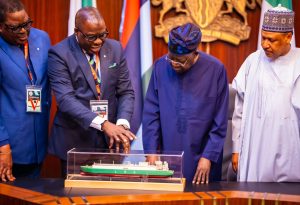

…NLNG project crosses 90% completion milestone
President Bola Ahmed Tinubu has described the Nigeria LNG Limited (NLNG) Train 7 project as a critical investment in Nigeria’s economic future, saying its successful completion will accelerate the country’s transition to a gas-driven economy.
The President stated this on Thursday at the State House, Abuja, while receiving a delegation from NLNG led by its Managing Director and Chief Executive Officer, Adeleye Falade.
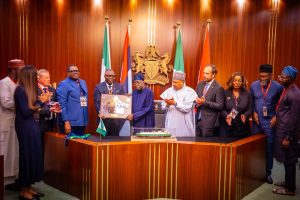

With the Train 7 project now more than 90 per cent complete, Tinubu said its delivery would strengthen Nigeria’s gas production capacity, increase exports, create jobs, deepen local participation and improve investor confidence in the country’s oil and gas industry.
He also charged NLNG to play a leading role in transforming Nigeria’s abundant gas reserves into tangible economic benefits for Nigerians through industrial growth, employment generation and increased national revenue.


“I congratulate you, Leye, on your appointment. Train 7 is at the centre of our national gas agenda. Its success matters not only to NLNG, but to Nigeria’s economic future,” Tinubu said.
The meeting focused on the progress of Train 7, prospects for further expansion and issues affecting NLNG’s operations and its contribution to the national economy.
Discussions also covered the pricing and accessibility of liquefied petroleum gas (LPG), LPG transportation through the Bonny-Bodo Road corridor, NLNG’s contribution to government revenue, its investment in the Bonny-Bodo Road and other national social-impact projects.
Tinubu congratulated Falade on his appointment as NLNG’s new Managing Director and Chief Executive Officer, noting that he assumed leadership of the company at a crucial period in Nigeria’s quest to maximise its gas resources.
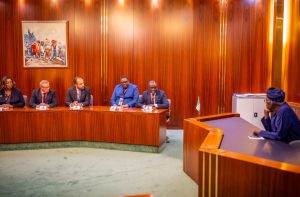

The President commended the progress made on Train 7, describing the project as a demonstration of effective partnership, Nigerian Content development, project delivery and investor confidence.
He assured the NLNG management that the Federal Government would continue to improve the business environment, strengthen regulatory clarity and tackle bottlenecks capable of frustrating major investments in the oil and gas sector.
“Nigeria is open for business, but it must be business that creates value at home—building capacity, supporting communities, protecting the environment and contributing to national prosperity. NLNG must continue to lead by example,” he said.
Responding, Falade thanked the President for the administration’s support for NLNG and the broader gas sector, assuring him that the company remained committed to completing Train 7 safely, efficiently and to the required standards.
“Your Excellency, we appreciate your administration’s support for NLNG and for the wider gas sector. Train 7 is a strategic national undertaking. With the project now over 90 per cent complete, our immediate priority is to deliver the remaining work safely, efficiently and to the required quality, while preparing the plant for reliable and sustainable operations,” Falade said.
According to him, the completion of Train 7 will expand Nigeria’s LNG production capacity while supporting export growth and creating opportunities for Nigerian workers, contractors and businesses.
He added that the project would deepen Nigerian participation in the gas value chain and enable the country to derive greater long-term economic value from its vast natural gas resources.
The NLNG boss also highlighted the company’s commitment to strengthening the domestic LPG market and improving access to cleaner cooking fuel for households and businesses across the country.
Falade called for stronger coordination among the Federal Government, regulators and industry stakeholders to increase domestic LPG supply, improve storage and distribution infrastructure, reduce avoidable costs and establish a more transparent and efficient market.
“Improving LPG accessibility is important to Nigeria’s energy transition and to the wellbeing of millions of Nigerian households. NLNG remains committed to supporting the domestic market, but improving affordability requires coordinated action across the entire LPG value chain,” he said.
Falade further sought the President’s intervention in addressing ease-of-doing-business challenges confronting the company, particularly the proliferation of taxes, levies, charges and regulatory requirements imposed by different government agencies and levels.
He noted that multiple and, in some cases, conflicting fiscal and regulatory obligations could increase operating costs, create uncertainty and discourage further investment in the sector.
The NLNG chief executive assured the President that the company was prepared to align more closely with the Federal Government’s development agenda and explore new areas of partnership that would support Nigeria’s economic growth.
The meeting ended with a renewed commitment by both the Federal Government and NLNG to maintain momentum on Train 7 as the project enters its final phase.
The stakeholders also pledged to strengthen collaboration aimed at ensuring the successful delivery of the project and maximising NLNG’s contribution to Nigeria’s gas development, energy transition and broader economic transformations.